
About PIR insulation
ecoPIR brings PIR insulation into focus for roofs, walls and floors. PIR, or polyisocyanurate, is a rigid foam insulation used with protective facings to help reduce heat transfer through a building. Its low thermal conductivity can make a thinner insulation layer possible than materials with higher conductivity, helping you make the most of available space. Explore applications for pitched and flat roofs, lofts, external walls, floors and agricultural buildings. The right board, thickness and installation detail depend on the construction, moisture exposure, loading and fire requirements. Contact ecoPIR to discuss your project and request current product information before specifying.
More insulation. Less space.
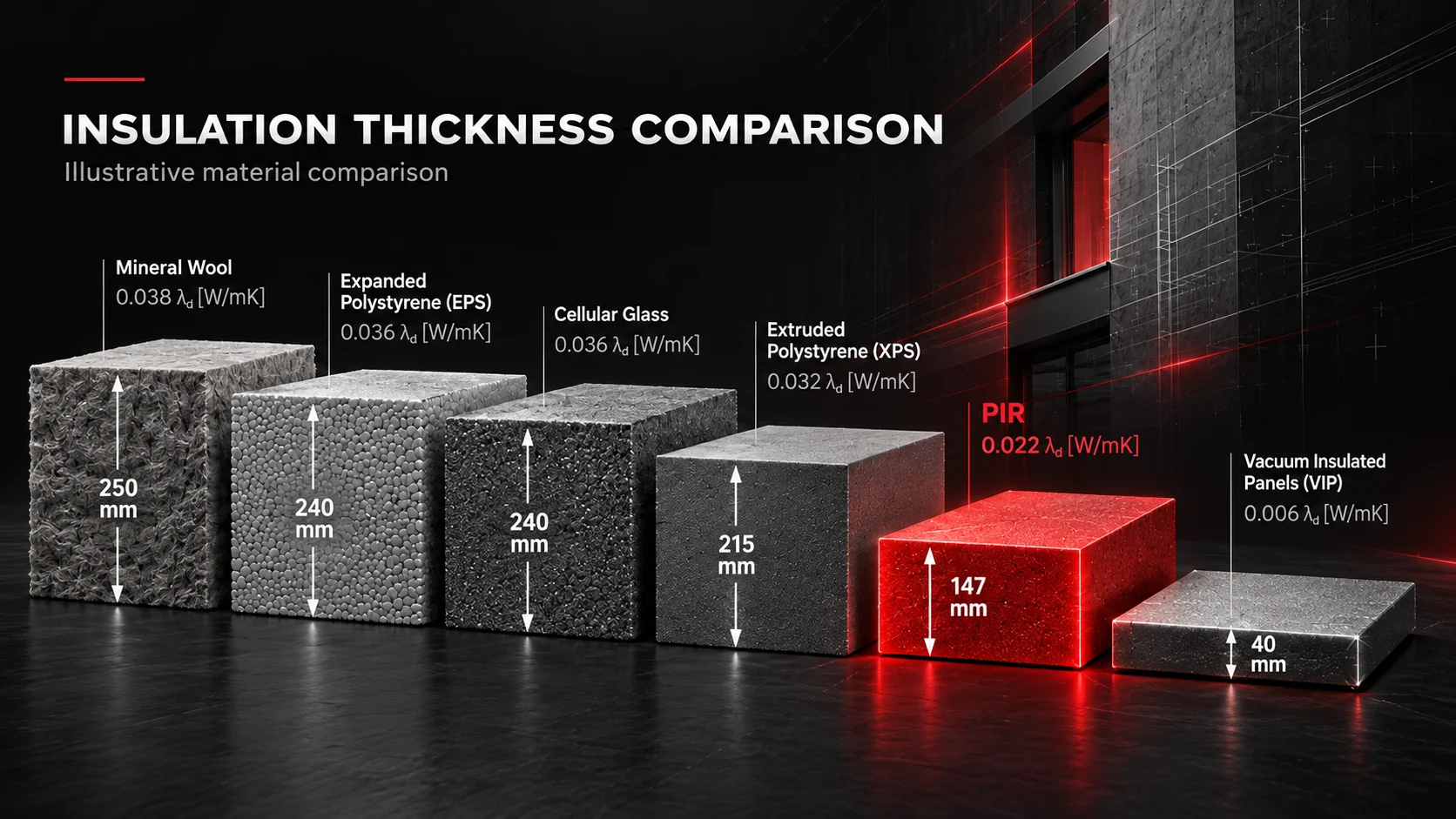
Thermal performance depends on both the material and its thickness. For the same thermal resistance, a material with a lower thermal conductivity (λ) needs a thinner layer. PIR can therefore be useful where build-up depth is limited.
The illustration is a general comparison, not a specification for an ecoPIR product. Thicknesses depend on the conductivity assumed for each material. Compare current declared values, the complete construction and the applicable building requirements before selecting insulation.
Let’s talk about your project.
Planning a new build or improving an existing space? Tell us the application, area and insulation thickness you have in mind. Ask for current product information and availability.